

Burnout has become one of the biggest challenges facing today’s workforce.
Employees are navigating increasing workloads, constant digital communication, staffing shortages, and the pressure to do more with less. While organizations are investing in wellness initiatives, many employees continue to report feeling exhausted, disconnected, and overwhelmed.
The reality is that burnout prevention requires more than occasional self-care reminders.
It requires opportunities for people to slow down, reconnect, and recharge in meaningful ways.
This is where creative wellness can help.

Understanding Burnout
Burnout is more than feeling tired after a busy week. It is a state of physical, mental, and emotional exhaustion that develops over time.
Common signs of burnout include:
Chronic stress and fatigue
Difficulty concentrating
Increased irritability
Reduced motivation
Feeling disconnected from work or colleagues
Emotional exhaustion
While organizations cannot eliminate every workplace stressor, they can create environments that support employee well-being and resilience.
Why Creativity Matters
Many workplace wellness programs focus on physical health, productivity, or stress management techniques. While these approaches are valuable, creativity offers something unique.
Creative experiences invite employees to step away from problem-solving and performance expectations and engage in a different way of being.
When people are creating, they are often:
More present and focused
Less concerned with productivity
More connected to themselves and others
Engaged in curiosity and exploration
Experiencing moments of play and enjoyment
These experiences can help interrupt the cycle of chronic stress and provide opportunities for restoration.
Supporting Nervous System Regulation
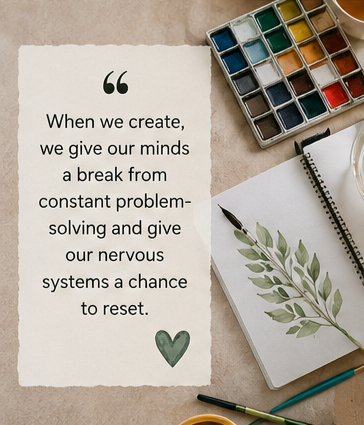
When we are constantly operating in a state of pressure and urgency, our nervous systems rarely have an opportunity to reset.
Creative wellness practices such as mindful art-making, journaling, movement, and reflection can help employees slow down and reconnect with the present moment.
Many participants leave creative wellness sessions saying things like:
“I haven’t stopped thinking all day until now.”
“I forgot about work for an hour.”
“I feel calmer than I have all week.”
These moments matter.
Burnout prevention is not about eliminating stress entirely. It is about creating regular opportunities for recovery and regulation.
Building Connection and Belonging
Burnout often thrives in isolation.
One of the most powerful outcomes of creative wellness experiences is the sense of connection they create among participants.
When employees create together, conversations deepen. People see one another beyond their job titles and daily responsibilities. Teams experience moments of authenticity, empathy, and shared humanity.
These experiences help strengthen workplace culture and foster a greater sense of belonging.
A Proactive Approach to Well-Being
Organizations often address burnout after it has already become a problem.
Creative wellness offers a proactive approach.
By providing employees with opportunities to pause, reflect, connect, and engage in meaningful creative experiences, organizations can support well-being before stress becomes chronic exhaustion.
Creative wellness is not a replacement for organizational change, healthy leadership, or supportive workplace policies. However, it can be an important part of a broader strategy to support employee well-being and resilience.
Creating Space for People to Thrive
At its core, burnout prevention is about creating environments where people can thrive, not simply survive.
Creative wellness experiences provide employees with opportunities to slow down, reconnect with themselves and others, and return to their work feeling more grounded, refreshed, and engaged.
Sometimes the most productive thing we can do is pause, create, and remember that we are human.
Want to experience creative wellness for yourself?
Explore upcoming workshops, private sessions, or corporate wellness offerings here on my website.